we don’t deserve any credit

2009 July 10
by pensum

An interview with painter Agnes Martin
by Chuck Smith & Sono Kuwayama
at her studio in Taos in Nov. 1997.

thinking outside the box

2009 July 10
by pensum

Nikola Tesla
(July 10, 1856 – January 7, 1943)
read article

presidential taste

2009 July 9

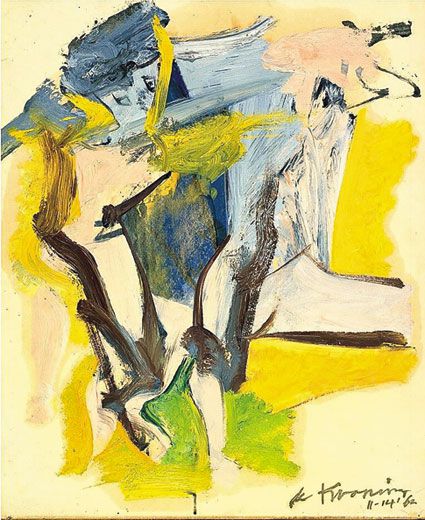
(WSJ) Barack Obama is taking on health care, financial regulation, torture and environmental policy. He’s also revamping the White House art collection. The Obamas are sending ripples through the art world as they put the call out to museums, galleries and private collectors that they’d like to borrow modern art by African-American, Asian, Hispanic and female artists for the White House. In a sharp departure from the 19th-century still lifes, pastorals and portraits that dominate the White House’s public rooms, they are choosing bold, abstract art works. (read)

iron, glass and revolution

2009 July 9

Tatlin’s tower, more accurately known as the Monument to the Third International, remains his most famous creation. It was commissioned in 1919 as a monument to the Bolshevik Revolution, which had taken place just two years before. As Lynton observes only in passing, the entire project was undertaken against a background of civil war, food shortage, political terror and epidemic disease (the last of which had killed several of Tatlin’s colleagues by the mid-1920s), so the artist’s bravado was breathtaking. What he planned was to be the tallest structure in the world, and also the most innovative, though elements of Eiffel’s tower in Paris (which Tatlin had seen) and of Athanasius Kircher’s famous seventeenth-century representation of the Tower of Babel were evident in the design. Conceived in deliberate contrast to the lifeless, useless busts and memorials of the previous regime, it was also to be functional, to include a massive conference hall, meeting rooms (the building was to be the headquarters of the Communist International), and a space for projecting films and disseminating messages of brotherhood, harmony and peace (the top tier would also function as a radio mast). The marvels of technology were one theme, but movement was another, so each of the four main function spaces, suspended within an open framework, was designed to rotate, each at a different but predictable speed. In this way, as well as reflecting the dynamism of the dawning age, the building could double as a slow-moving calendar and clock, perhaps even as a means of measuring stars and space. In its restlessness and transparency, the building embodied the democratic challenge to authoritarian power that Tatlin so welcomed. As Viktor Shklovsky, the critic, approvingly observed when he saw Tatlin’s model, ‘The monument is made of iron, glass and revolution.’ (read)

the world as place of truth

2009 July 7

Ideas about directing — including Mr. Schechner’s rebuttal that the joke should be the other way around, with three bottles of vodka and two directors — are in no short supply at the events marking the 10-year anniversary of Grotowski’s death. Grotowski developed the concept of the “poor theater” — theater that has been stripped down to its most essential parts — such that the actor does not act so much as reveal truth. As part of The Grotowski Year, performances, lectures, panel discussions, film screenings, book promotions, workshops, and exhibitions are taking place all year long around the world. (read)

with my back to the world

2009 July 6

In response to a request from the filmmaker (see comments), the link to the documentary on artist Agnes Martin, With My Back to the World, has been removed.  Nonetheless,  I urge you to purchase a copy directly from New Deal Films–it’s well worth the $29.99.

flatten

2009 July 6
by pensum

to touch the sky

2009 July 6
by pensum

[ARTnews] “We award the sky its color,” Turrell told ARTnews during a visit to the Second Wind site. “We learn to perceive—we create what we perceive. And so by extension we shape our reality. This learned perception, which is something we all share, has always intrigued me. It is what I try to capture.”

While explicitly derived from Buddhist and Hindu sacred architecture, Turrell’s Skyspaces—and by extension all his light-based work—can also be seen as an outgrowth of his Quaker upbringing and ongoing observance. Quaker meeting houses are devoid of all religious imagery, with neither altars nor liturgy nor hymns to guide the participants’ attention as they commune in collective silence. Instead, as Turrell’s grandmother explained to him when he was a boy, when attending a Quaker meeting one should “go inside and meet the light.”

“I want people to treasure light the way we treasure gold,” Turrell says. “It happens slowly. The space is made to arrest the light, to apprehend the light. You enter it and remain alert, but you also enter a contemplative state. It means a lot less talk and a lot more silence.” (read)

requiem again

2009 July 3
by pensum

clear polarities

2009 July 3

[Neue Zürcher Zeitung] The greatest warring power in today’s world is the USA, whose occidental interventions go hand-in-hand with sex and crime scandals. This is the stuff of Peter Sellars’ Othello. In the hands of this American director, Shakespeare’s Venetians, who speak the original text word for word, are Afro-Americans and Latinos, communicating in their dark blue uniforms over cell phones. The decision to send General Othello to Cyprus to defend the outpost against the Turks is reached via telephone conference. And Sellars has updated both skin colours and sexes to fit today’s reality. The governor of Cyprus is a woman, Signora Montano, which in the course of this epic tale, leads to complications. She becomes a rape victim. On the surface, military life is dictated by prudery. It doesn’t take much to topple inhibitions. A few beers to celebrate the defeat of the Turkish fleet – Lieutenant Cassio loses control and turns on his female comrade. (read)